What Is a CDP? Why a Customer Data Platform Matters

Collecting customer data is like the heart of doing business. To make a business successful, it often starts with having good data that can be used to analyze various things. CDP is one of the tools to manage a good customer data system. Today, we will talk about CDP. What are the benefits of CDP? Do all brands need to use it? Let's follow.
What is CDP? Why do we need to store customer data in CDP?
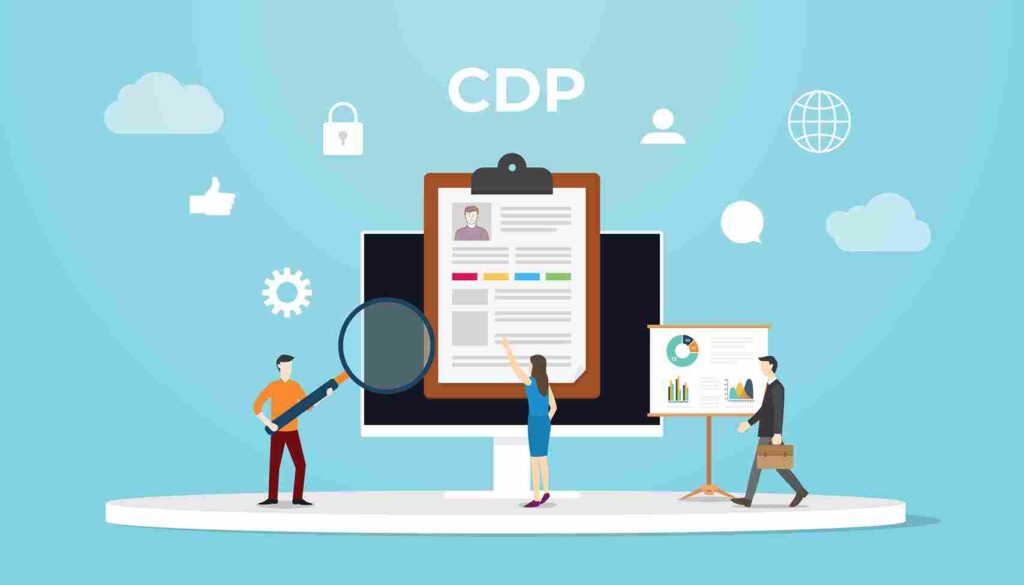
CDP stands for Customer Data Platform. It is a platform for collecting, organizing and managing customer data from various sources. CDP is a useful tool for businesses of all sizes. Businesses that use CDPs can better understand their customers, create effective marketing campaigns, increase sales and improve customer satisfaction.
CDPs collect customer data from all channels, such as Facebook Marketplace, websites, and applications.
Email CRM organizes data into a comprehensive customer profile, analyzes data to understand customer behavior and needs, segments customers based on various criteria, and sends customer data to other marketing systems, such as email delivery systems and online advertising systems.
What are the reasons for storing customer data in a CDP?
1. Deeply understand your customers
CDPs help marketers gather customer data from multiple channels such as websites, apps, social media, email, CRM, etc. This data helps marketers understand customer behavior, needs, and preferences.
2. Create an effective marketing campaign.
When marketers understand their customers, they can create marketing campaigns that are more relevant to them. These campaigns are more likely to succeed than traditional campaigns.
3. Increase sales
An effective marketing campaign will increase sales. Businesses can generate more revenue from their existing customers.
4. Create customer satisfaction
Customers feel satisfied when they receive a personalized experience and are more likely to purchase products or services from a business in the future.
5. Save time and money
CDPs help marketers be more efficient. They don’t have to waste time searching for and analyzing customer data from multiple sources.
Suppose that an online clothing business, Tiktok, is selling clothes. The business can use CDP to collect customer data such as product purchase data, website visit data, application usage data, social media data, etc. This data will help marketers understand what types of clothes customers like to buy, how much they like to buy clothes, where they like to buy clothes, etc. This data will help marketers create marketing campaigns that meet customer needs, such as recommending clothes that customers like, offering discounts on clothes that customers have viewed, notifying customers when there are new products, etc. These campaigns have a higher chance of being successful than general campaigns.
How are CDP, DMP, and CRM different?
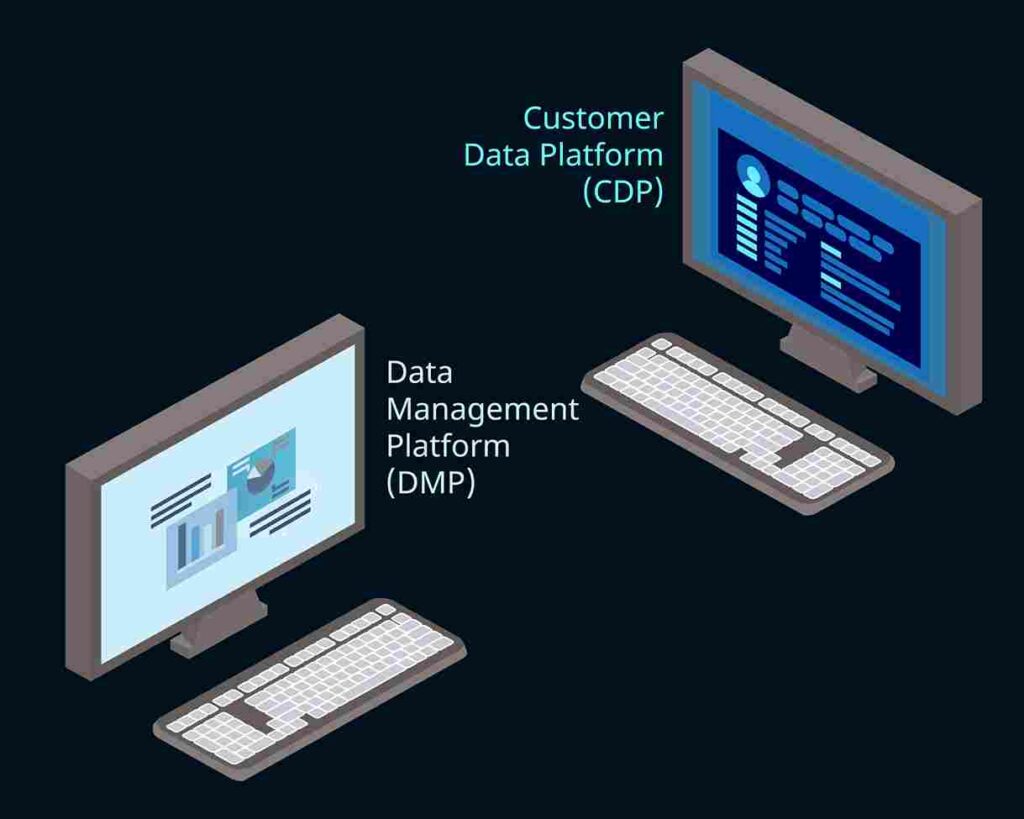
CDP, DMP and CRM are all tools used to manage customer data, but they have different purposes and methods of operation as follows:
CDP (Customer Data Platform)
- It is a platform that collects, organizes and manages customer data from all sources, both online and offline.
- Focus on collecting raw data and creating insights about customer behavior and needs.
- It enables businesses to create effective personalization experiences for their customers.
- CDP focuses on collecting holistic customer data to create insights and personalization.
DMP (Data Management Platform)
- It is a platform that manages customer data specifically for advertising.
- Focus on collecting aggregated data
- It helps marketers identify their target audience and create effective advertising campaigns.
- DMP focuses on collecting customer data for advertising purposes.
CRM (Customer Relationship Management)
- It is a system used to manage customer relationships.
- Focus on tracking and managing communication data (Interaction) between businesses and customers.
- It helps businesses to provide customer service and build good customer relationships effectively.
- CRM focuses on tracking communications and building relationships with customers.
Where is Customer Data collected?
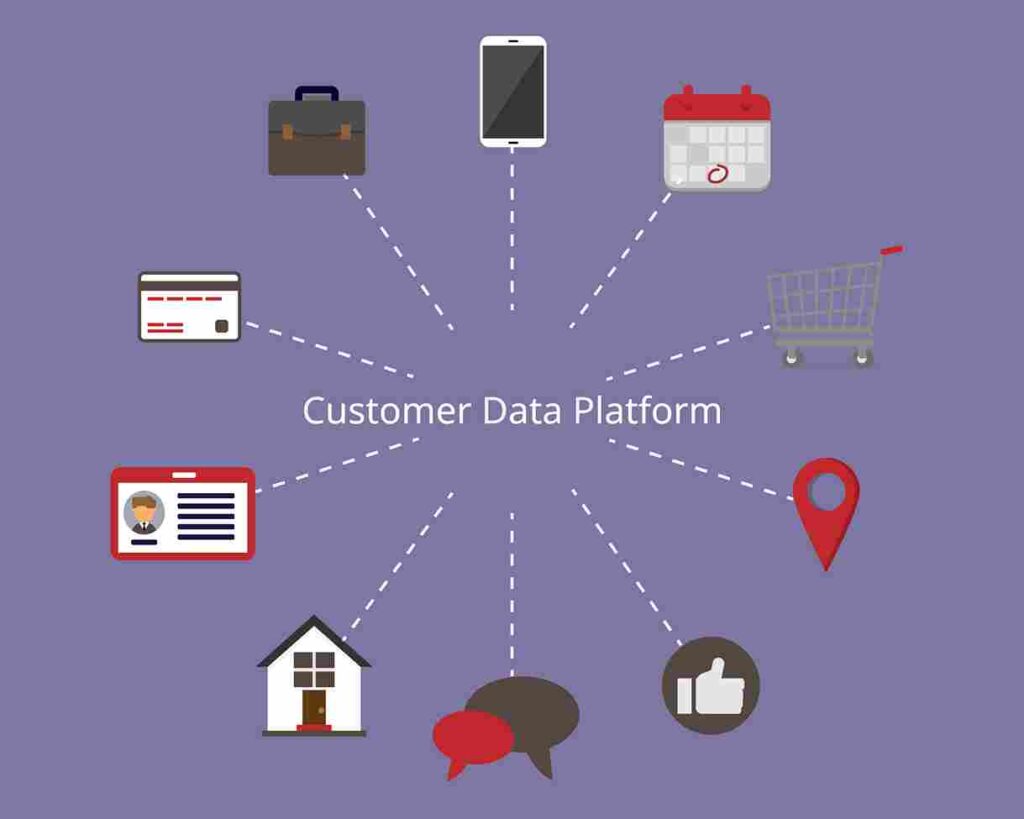
Customer Data collection channels are divided into 2 main groups as follows:
1. Online channels
- The website collects data through Google Analytics, Cookies, form filling, subscription, click behavior tracking, product viewing, downloads, etc.
- Social media collects data through tracking posts, comments, shares, audience analysis, etc.
- Email collects data through tracking of opens, link clicks, replies, etc.
- Applications collect data through app usage, click behavior, settings, installation data, etc.
- Online advertising collects data through ad clicks, ad viewing behavior, tracking information, etc.
2. Offline channels
- Storefront: Collect data through receipts, subscriptions, customer records, purchasing behavior tracking, etc.
- Events: Data is collected through registration, questionnaires, interviews, etc.
- Telephone: Collect data through calling customers, recording conversations, etc.
- Forms: Data is collected through form filling, questionnaire responses, etc.
Precautions for collecting Customer Data
- Personal Data Protection Law: Data must be collected legally and customers must obtain consent before collecting data.
- Data Security: Data must be stored securely and protected from unauthorized access.
- Customer Privacy: Customer privacy must be respected and information must be used appropriately.
What are the benefits of CDP?
1. Understand your customers in 360 degrees.
CDP helps businesses to gather customer data from all channels such as websites, applications, social media, CRM, etc. in one place, enabling them to create complete customer profiles, understand the behaviors, needs and preferences of each customer.
2. Better Personalization
With complete customer data, businesses can use it to create personalized experiences for each customer, such as recommending products that meet their needs, offering appropriate promotions, or sending messages that match customer behavior.
3. Customers are more engaged
Deeper understanding of customers allows businesses to create content and activities that resonate with customers, driving them to engage more with the brand.
4. Optimize campaign ROI
CDP helps businesses accurately track the results of marketing campaigns such as Google Ads, TikTok Ads , and Facebook Ads , analyze which campaigns are performing, optimize campaigns, and increase campaign ROI.
5. Effective cross-channel marketing
CDPs help businesses deliver a seamless, consistent experience across channels. Customers can easily start a purchase on one channel and continue on another.
6. Respond quickly with real-time information.
It helps businesses analyze customer data in real time, understand customer behavior at that time, and respond to customer needs quickly.
7. Increase customer retention and loyalty.
Deep understanding of customers, personalization, and rapid response to customer needs are all factors that help increase customer retention and loyalty.
Businesses can apply this to gain a 360-degree understanding of their customers, leading to more effective marketing, as follows:
- Develop products and services: Analyze customer data to find needs and develop products and services to meet those needs.
- Marketing: Analyze customer data to identify target audiences and deliver targeted marketing messages.
- Improve service efficiency: Analyze customer data to identify weaknesses and improve service.
- Build customer relationships: Analyze customer data to understand your customers and build relationships that
What businesses need a CDP Service (Customer Data Platform)?

CDP is suitable for businesses of all sizes that want to understand their customers and create effective marketing campaigns. Businesses with customer data from multiple channels. Businesses that want to create personalized customer experiences such as SMEs, retail, e-commerce, banking, insurance and service businesses.
Any business looking for help in collecting customer data, M-Creation has a CDP (Customer Data Platform) service to help collect customer data for your business in a comprehensive manner.
Interested in making a CDP program? Click!
What are some common questions about CDP?
What is the difference between CDP and CRM?
What can CDP do?
Email CRM organizes data into a comprehensive customer profile, analyzes data to understand customer behavior and needs, segments customers based on various criteria, and sends customer data to other marketing systems, such as email delivery systems and online advertising systems.
 Facebook
 LINE
LINE



 Chat on LINE